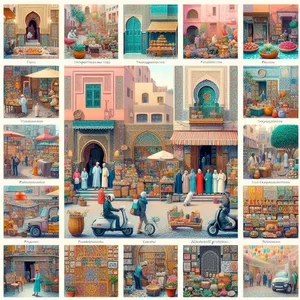
Rbati, Slaoui and Fassi embroidery are all Moroccan, but each has its own way, and even one city has older and newer forms. Don't judge a piece by its name or a small photo: look at the whole thing and let the maker explain how she made it.
Grandmother's embroidery
Many Moroccan homes have an embroidered piece: a cushion a grandmother made, the Eid djellaba, a caftan that only comes out for weddings. Tarz is learned hand to hand and takes time and patience, which is why a piece stays in the family for years.
Rbati, Slaoui and Fassi: each its own way
Every city has its way, every maker her hand. No embroidery is better than another; there's the one you like and the one that suits the piece you want. Families don't agree either: some want the old designs exactly as they were, others love new colours.
If the piece is for a wedding, also read Henna at a Moroccan wedding. If you're redoing your salon and want a touch of embroidery on the cushions, see Upholsterer and Moroccan salon.
On Hdaya you'll find embroiderers and cooperatives in your city: look at their work and send them a photo of the piece you have in mind.
 Yacoub El Mansour, Rabat
 2 services
Haute couture by Nadimoda cooperative